 Written by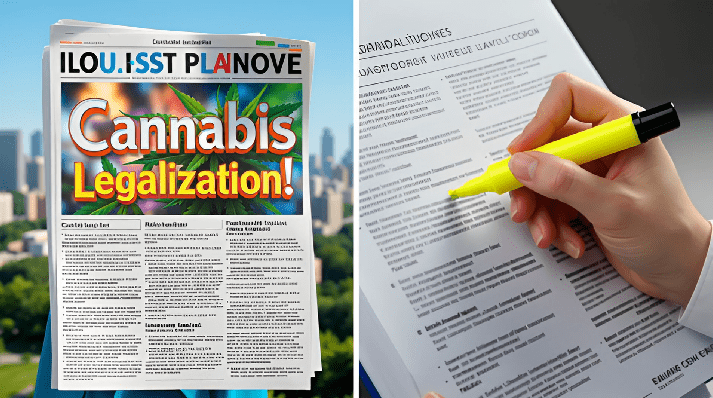
A flashy news alert screams “Virginia Legalizes Cannabis Sales!” but you can’t find a dispensary open anywhere. This frustrating disconnect happens because cannabis headlines mislead by oversimplifying complex, incremental legal processes. They chase clicks, not clarity. For cultivators and patients, relying on headlines can lead to costly missteps—like assuming a law is fully active when it’s only a framework. The real truth lives in the dry, detailed language of source documents: budget bills, commission reports, and local ordinances. Learning to read them is your most critical compliance skill.
The 3 Ways Headlines Deceive You
Headlines distort reality through predictable patterns that create false urgency or hope.
- The “Bill Passage” Mirage: A headline celebrates a bill’s passage in one chamber. It doesn’t mention Virginia’s “reenactment” clause, which requires a second passage next year, or that the bill lacks crucial funding. The Virginia Recreational Cannabis Sales Bill Explained in headlines rarely covers its death in committee later.
- The “Legalization” Oversimplification: Headlines use “legalized” as a blanket term. They fail to distinguish between personal possession (which is legal), medical sales (which are operational), and adult-use retail (which is delayed). This blurring causes public confusion and enforcement risks.
- The “Immediate Effect” Fallacy: Media often ignores effective dates. A law might pass but not take effect for 12-18 months, leaving a gap where the public assumes new rights that don’t yet exist. This is a primary reason cannabis headlines mislead.
Your Toolkit for Reading Source Documents
Arm yourself with these direct strategies to bypass the hype.
- Find the Fiscal Note: Every serious bill has a fiscal impact statement. If it says “$0” for implementation, the program has no funding and won’t launch. This is how legislation dies quietly.
- Control-F is Your Best Friend: Use “find” in PDFs. Search for “effective date,” “appropriation,” “repeal,” and “contingent upon.” These clauses hold the real conditions.
- Compare Versions: Legislation changes. Compare the introduced version, the committee substitute, and the final enrolled bill. The devil is in the deletions and amendments.
- Watch the Commission, Not Just the Chamber: The technical details in a report like the recent Virginia Cannabis Commission Video Report Just Dropped often become law verbatim. The commission work is the blueprint.
A Virginia Case Study: From Headline to Reality
Let’s trace a real example. A headline reads: “Lawmakers Approve Cannabis Sales.” The source document, however, reveals a conditional structure. It states sales may begin only after a new regulatory agency adopts final regulations, a process that could take 18 months. It also gives local governments the power to opt-out via referendum. The headline promises access; the document creates a multi-year, locally-variable labyrinth. This is why you must always consult a Virginia Marijuana Attorney Guide for Cannabis Charges for interpretation tailored to your actions.
The NCCC: Cutting Through the Noise Together
You don’t need to become a full-time legal researcher. The Norfolk City Cannabis Community exists to pool our knowledge and decode the bureaucracy as a team. When a major headline breaks, our members immediately head to the source, sharing key excerpts and plain-English summaries in our Cannabis Legalization Law Forum.
Join the NCCC today. Transform from a confused headline reader into an informed advocate. Gain the collective intelligence to protect your cultivation and your rights. Start by exploring the ongoing discussions in our Community Forums.
Build with Your Community: Use your NCCC profile to list your professional service or shop. Find the legal experts, compliance consultants, and honest actors who prioritize facts over hype, all within our network.
In an era of misinformation, the ability to read source documents is your superpower. It turns anxiety into action and confusion into strategy. When cannabis headlines mislead, your community and your own critical eye provide the truth.
What’s the most misleading cannabis headline you’ve seen recently, and what did the source document actually say?